Publication date: June 23, 2026
Japan’s 24/7 CFE market forecast to reach 62.72 TWh by FY2040, driven by data center growth
Fuji Keizai has released the results of its domestic market research on 24/7 carbon-free energy (CFE). The company forecasts that demand will begin to take off around FY2028, mainly among large companies such as data center operators and manufacturers. By around FY2035, major electricity retailers are expected to commercialize 24/7 CFE as a standard product, with adoption also expanding among environmentally conscious small and medium-sized enterprises. The market is projected to grow to 27.17 TWh in FY2035 and 62.72 TWh in FY2040.
PowerX to launch data center-integrated battery device in 2027
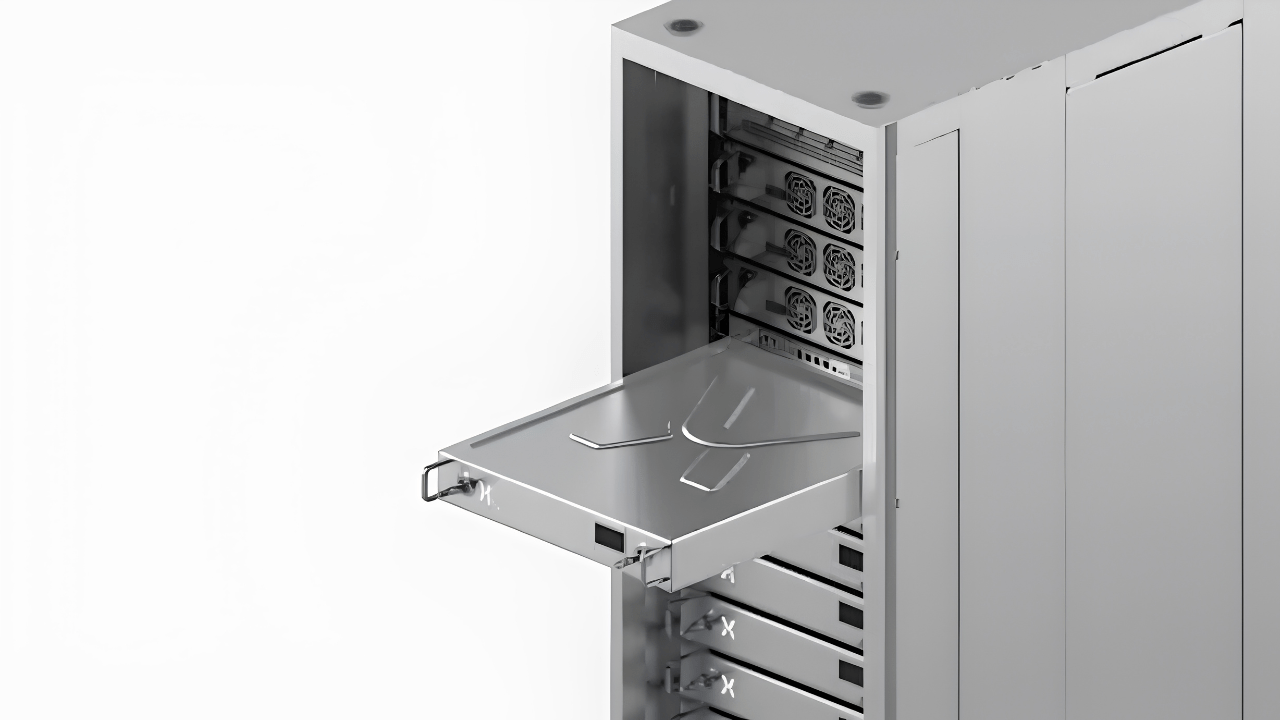
PowerX, a BESS manufacturing company, is developing PowerX Energy Blade, a battery device that can be integrated into data centers, with commercialization planned in 2027. The drawer-like device contains batteries, liquid-cooling equipment, control computers, and other components. It is compact size and can secure a storage capacity of 1–3 kWh.
The company also plans to begin mass production in 2027 of “Mega Power DC,” a containerized data center that integrates data center functions with a BESS. PowerX will accelerate the rollout of products that combine data centers and batteries.
NTT DATA and partners test hybrid cooling for AI-oriented edge data centers
NTT DATA, Internet Initiative Japan (IIJ), and Hibiya Engineering have started a demonstration test to cool an AI-oriented modular edge data center using a hybrid cooling system that combines air and liquid cooling. The companies will verify its usefulness in environments where space for installing cooling equipment is limited, such as urban areas and existing data center facilities.
—