

Publication date: July 1, 2026
Key Takeaways
Japan has set concrete targets for its nuclear power policy, but its nuclear revival faces four major challenges: nuclear waste management, gaining local consensus, high investment costs, and securing human resources.
Despite these challenges, Japan will push forward with nuclear development in the coming decades.
Japan’s Nuclear Revival Faces Four Major Hurdles
The Fukushima accident 15 years ago led to all nuclear plants across the country halting operations and prompted the adoption of strict safety measures, which in turn slowed nuclear power restarts. Recently, the Japanese government has set concrete targets for its nuclear power policy for the first time, including replacing two to five reactors by the 2040s and 11 to 14 reactors by the 2050s (METI). The Ministry of Economy, Trade and Industry (METI)’s new nuclear power policy action guideline proposal shows strong political will to replace aging reactors, while also leaving open the possibility of extending operating periods (even beyond the current 60-year cap). These multiple pathways aim to achieve a nuclear power share of 20% of total power generation by 2040. However, there are four major challenges: nuclear waste management, achieving local consensus, high investment costs, and human resources.
Nuclear Waste Management Is a Chronic Issue
Japan currently has no permanent solution for managing spent nuclear fuel, which continues to accumulate in fuel pools at nuclear plants. In Aomori, the development of nuclear fuel-cycle facilities in Rokkasho is still in progress, and a recent expert meeting confirmed that the expected completion targets for the Rokkasho reprocessing plant and the MOX fuel fabrication plant are FY2026 and FY2027, respectively (METI).
Regarding a final disposal site for high-level radioactive waste, METI announced in April that it would begin surveying Minamitorishima, an uninhabited island around 2,000 km from Tokyo. However, this selection process could take approximately 20 years (Nikkei). Establishing a permanent solution for nuclear waste is crucially important as the government seeks to increase reliance on nuclear power over the coming decades.
Gaining Local Consensus
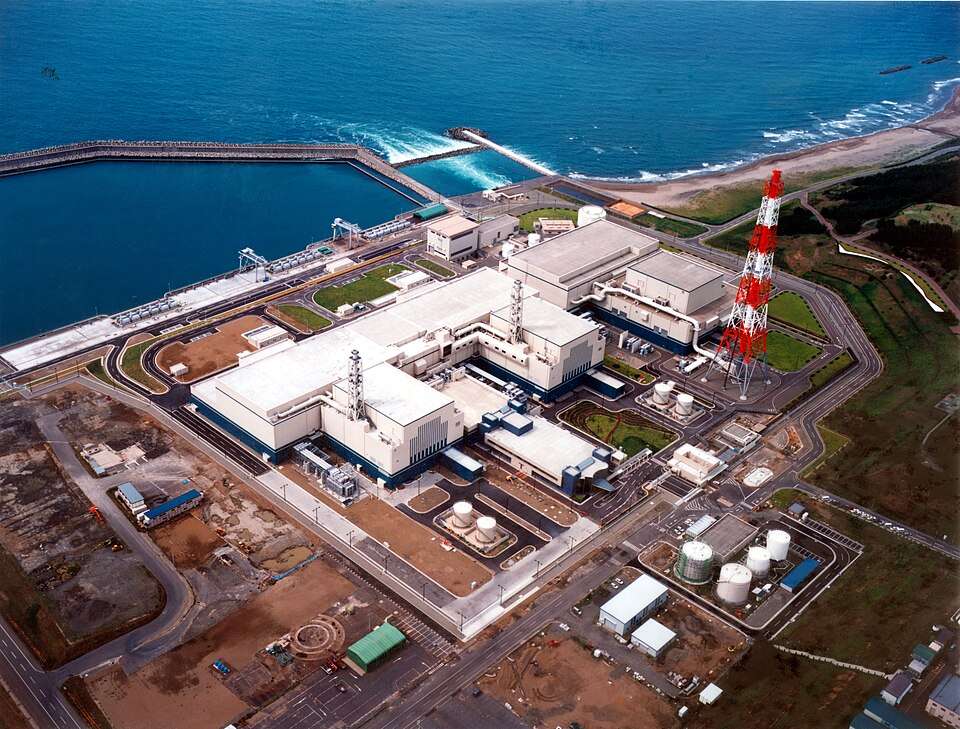
Nuclear restarts divide public opinion between safety concerns and expected economic benefits. Since the Fukushima accident, local concerns over nuclear plant operations have remained deep-rooted, and obtaining local consent for nuclear restarts has taken time and effort. Earlier this year, Unit 6 of the Kashiwazaki-Kariwa Nuclear Power Plant restarted operations. Although Kashiwazaki-Kariwa Unit 6 passed the Nuclear Regulation Authority’s safety review in 2017, it took about 8 years for the Niigata governor to approve the restart. Efforts to include local people in discussions about the restart at an early stage seem essential.
High Investment Costs
Continued inflation and the huge additional costs for implementing enhanced safety measures are an increasingly heavy burden on nuclear operators. To unlock public support, METI has submitted an amendment bill for the Electricity Business Act to the National Diet, aiming to expand its financial support for large-scale energy infrastructure, including nuclear power plants. Existing financial support schemes, such as the Long-Term Decarbonization Power Source Auction (LTDA), have also been used for safety-related investments in existing nuclear plants, helping to offset rising regulatory costs at Japan’s existing nuclear power capacity.
Regarding human resources, operations at nuclear plants across Japan were suspended after the Fukushima accident, as well as construction work. As a result, the number of young engineers and researchers aiming to work in the nuclear sector declined, while those with experience have since retired. METI sees human resource development as one of the core pillars of the revised action guidelines and plans to formulate measures during FY2026 to secure personnel for the nuclear sector (METI).
Despite these challenges, Japan will push forward with nuclear development in the coming decades. The potential nuclear revival should not be viewed simply as running in parallel with the increasing adoption of renewables. Rather, it should be seen as a factor that could change ‘the rules of the game,’ as nuclear power is likely to be consumed by large-scale offtakers, which could restructure the existing dynamics in the energy sector.

________________________________________________________________________________________
Shulman Advisory supports foreign players in navigating policy, market design, and commercial execution.