Publication date: June 3, 2026
JERA Cross Tests Hourly Matching Using NFCs for Google Data Center
JERA Cross announced that, as part of a demonstration project, it generated hourly certificates for Google’s data center to verify the use of renewable energy. The project used non-fossil certificates (NFCs) from solar power generation operated by JERA Cross, along with generation and demand data. France-based Granular Energy and Spain-based Flexidao conducted the “hourly matching” process, which matches renewable energy supply and demand on an hourly basis.
The draft revision of the Scope 2 Guidance under the GHG Protocol is considering introducing concepts such as hourly matching for the environmental value of electricity.
NTT to Triple Domestic Data Center IT Power Capacity to 1 GW by FY2033
The NTT Group will expand the IT power capacity of its domestic data centers to around 1 GW by FY2033, more than triple the current level. The group will roll out data centers suited for AI workloads across Japan and connect them through IOWN, its next-generation communications infrastructure, to build high-speed, low-latency AI infrastructure.NTT aims to capture demand for data centers suited to ‘sovereign AI,’ a concept that involves developing and operating AI within a country’s own borders, from companies, government agencies, local governments, and financial institutions that want to prevent sensitive information from leaking overseas by offering AI processing within Japan.
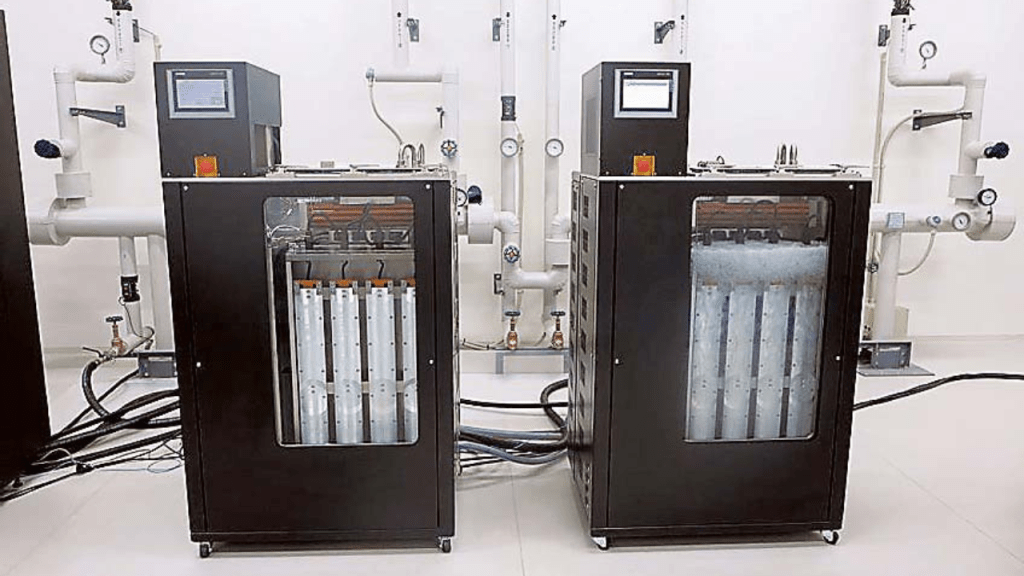
NTT will build new “AI-ready” data centers in Tokyo and Fukuoka City, both scheduled for completion in 2029. The new facilities will use liquid cooling technology to cool servers that handle AI processing. In Fukuoka City, NTT will also seek to develop regional AI demand and directly connect the facility to a landing station for international submarine cables.
MIC Seeks Demonstrations of APN and Workload-Shifting Technologies for Data Center Expansion
The Ministry of Internal Affairs and Communications (MIC) has opened applications for the FY2026 watt-bit coordination demonstration program. The program aims to promote effective coordination between power and communications infrastructure, known as ‘watt-bit coordination,’ to support the rapid development of data centers that require large amounts of electricity. The program calls for proposals to demonstrate distributed data center operations using all-photonics networks (APNs) and other advanced networks, as well as advanced workload shifting (WLS). The application period runs until June 12.
The Japanese government is working to strengthen Japan’s position as an international data distribution hub by promoting the regional distribution of data centers currently concentrated in areas such as Tokyo, as well as the development of submarine cables encircling Japan.