

Publication date: March 3, 2026
Japan’s Data Center Build-Out: Bottlenecks and Strategic Direction
Data centers (DCs) are becoming a significant influence on Japan’s energy landscape. Domestic DC energy demand is growing rapidly and is expected to increase from 0.47 GW in FY2025 to 6.16 GW in FY2034 (OCCTO). In anticipation of future DC expansion, the government has accelerated discussions through the “Public-Private Advisory Council on Watt-Bit Collaboration,” combining “watt (W),” the unit of electricity, and “bit,” the unit of digital information, to promote effective coordination between power and digital infrastructure. Japan is not only increasing its power and telecommunication connectivity, but aiming to supply decarbonized power to newly built DCs. This is a notable ambition when the current energy system shows high dependency on thermal plants, accounting for nearly two-thirds of the energy supply.
Bottlenecks: Capacity and Speculative Grid Claims
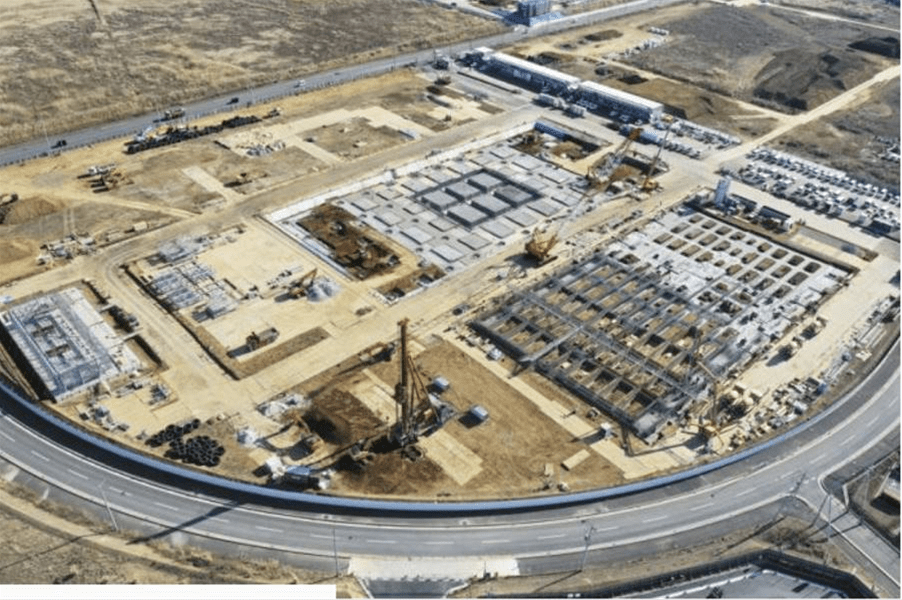
However, DC development in Japan faces several bottlenecks. Available land near high-demand urban areas with low disaster risk is becoming scarce, and projects often face opposition from local communities over landscape and noise concerns. Grid connection timelines are also lengthening, with some reaching up to 10 years. One reason for the delay is that DC operators often apply for excess grid capacity, engaging in “capacity hoarding.” For instance, in Inzai, Chiba Prefecture, which is currently Japan’s leading DC cluster, Tokyo Electric Power Company (TEPCO) Holdings confirmed that around 30% of the initially applied amount would not be used as of early 2025. Similar patterns are being observed in other DC clusters nationwide (Nikkei).
Government Subsidies and the Decentralization Agenda
Currently, Japan’s two largest urban centers, Tokyo and Osaka, host roughly 90% of DCs. However, as these urban centers increasingly face constrained grid connections and limited land availability, the Japanese government has pushed for DC decentralization. The government has launched support programs through the GX Strategic Zones initiative to drive decentralization. First, the government will subsidize municipalities that host ‘DC clusters,’ with the potential to scale to more than a gigawatt. The application phase for municipalities has already closed, and the government will select the final DC cluster zones around summer 2026. While this support is aimed at host municipalities, the government will also support individual DC operators with a total budget of JPY 210 billion over the next five years (CAS). DC operators that use 100% decarbonized power will be eligible to receive subsidies up to 50% of investment costs in parallel with an existing subsidy scheme that provides 50% support for the construction of DCs beyond the Tokyo and Osaka areas.
As another way to cope with the current mismatch between DC demand hot spots and renewable facilities, the Ministry of Internal Affairs and Communications (MIC) will launch a demonstration project this spring to connect geographically dispersed DCs via high-speed optical networks, with commercialization targeted for the late 2030s. The initiative will test whether computing workloads can be shifted in real time to regions with surplus electricity to improve system efficiency. For instance, when renewable-rich Kyushu faces curtailment risks, Tokyo’s DCs absorb the surplus electricity (Nikkei), which could significantly shift the future energy market if successful.
Pilot Projects Illustrating the Next Phases of DC Deployment
Among the different regions, Hokkaido has certainly emerged as a DC hub in the last few years. Kyocera Communication Systems opened the “Zero Emission Data Center Ishikari” with 2 to 3 MW capacity, operated on 100% renewable energy (wind and solar combined), in Ishikari City in October 2024. Also in Hokkaido, SoftBank is currently developing a large-scale DC project in Tomakomai City, which can be expanded up to 300MW scale, utilizing local renewable energy (Mirait One). While these projects largely rely on electricity supply from local renewable projects, Toyota Tsusho and its subsidiary, Eurus Energy Holdings, announced they will develop a 3MW DC co-located with wind power in Wakkanai, Hokkaido. Around 80% of the power will come from the nearby wind farm, with the remaining supplied as renewable electricity by Eurus Green Energy (Toyota Tsusho). These projects can serve as model cases of DCs operated on 100% renewable energy.
💡 Shulman Commentary: Similar to what we have witnessed with BESS, the emerging DC boom will likely reshape the Japanese energy landscape over the coming decades, as more DCs are expected to be built outside urban cores. The DC expansion also means more opportunities for renewable energy developers, as the government promotes DC deployment with renewable energy. To what extent nuclear will play a role within the new DC landscape is yet to be seen, but it can provide essential baseload energy for DCs, which could be a great advantage over wind and solar.

Shulman Advisory offers bespoke workshops, strategic analysis, guidance on license acquisition, and tailored projects to help you navigate market entry, procurement planning, and investment decisions.
Let’s talk!