Publication date: May 13, 2026
Japan Data Center Update 17: Utsunomiya Tender, TEPCO PG Aiming to Halve Connection Lead Time, and Tighter Capacity Rules
Utsunomiya Becomes Japan’s First City to Launch a Public Tender for Data Center Development
Nikkei reported that Utsunomiya will become the first city in Japan to launch a public tender to select a data center developer for land adjacent to TEPCO Power Grid’s Shin-Tochigi substation. The developer/operator will be selected through a proposal-based process, with applications accepted until September and a preferred bidder expected to be chosen in late October. In 2029, the developer is expected to start land acquisition, site preparation work, and facility construction.
Last year, Nikkei reported that the Agency for Natural Resources and Energy (ANRE) asked the city to consider attracting data center projects, because land is available on the south side of the substation, which has a maximum supply capacity of 400 MW and can be connected relatively quickly.
TEPCO PG Aims to Halve Data Center Grid Connection Lead Times as Applications Surge
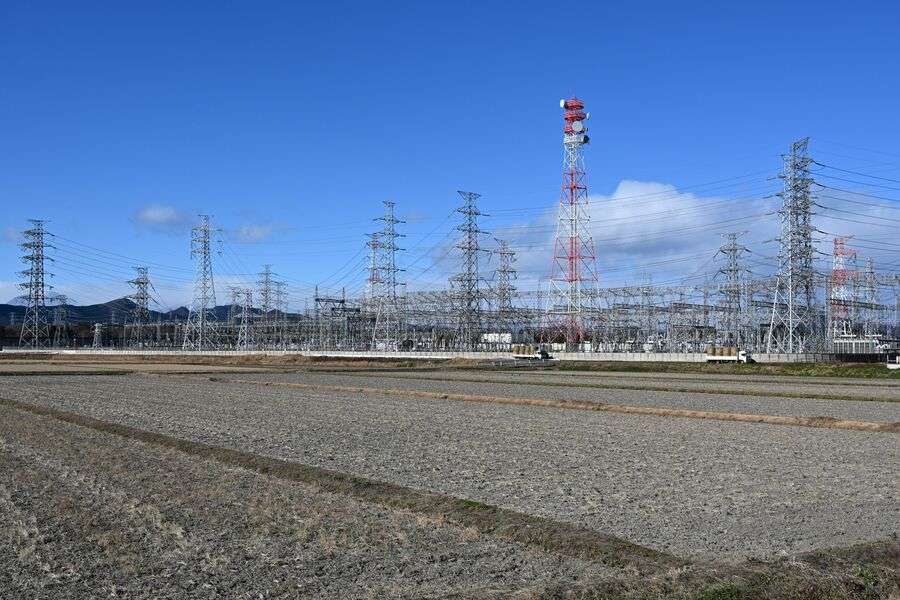
In Nikkei’s interview, the president of TEPCO Power Grid (PG) revealed its plan to halve the time required to develop power supply infrastructure for data centers. As of the end of FY2025, applications for transmission-line connections reached 15 GW, up 20% year-on-year. This is equivalent to roughly one-quarter of the utility’s current peak demand and is expected to be added over the next decade.
As concrete measures, President Yoshinori Kaneko said the company has started discussions with data center operators even before formal applications are submitted. By understanding project plans in advance, the company can improve construction efficiency by coordinating the timing of facility expansions or consolidating multiple sites into a single development plan. The company will also begin standardizing equipment specifications with other utilities and manufacturers to shorten procurement lead times.
The Ministry of Economy, Trade and Industry (METI)’s expert committee proposed measures to address the hoarding of grid capacity by large electricity consumers including data centers. One proposed measure would release unused capacity if actual demand remains below contracted capacity targets for a certain period. Another would allow TSOs to revise contracted capacity if consumers fail to reach their final contracted capacity level over an extended period. Both measures are expected to apply to consumers above a certain scale, with detailed criteria to be determined later.
Many data center operators expand server capacity in phases depending on utilization levels, creating uncertainty over when planned contracted capacity will be reached or whether it will ultimately materialize. Meanwhile, grid capacity is secured based on contracted power capacity. As a result, prolonged underutilization can effectively reserve unused capacity, potentially delaying grid access for other consumers.
–