

Publication date: Dec 22, 2025
Year in review 2025 (Dec 2025)
Policy
Proposed advanced procurement and Mid-Long Term Market to reshape retailer risk
In July, METI’s Working Group proposed a new requirement for electricity retailers to secure a certain proportion of their future electricity supply volume (in kWh) in advance, with the aim of stabilizing electricity prices. Specifically, the WG proposed that: (1) Retailers must secure 50% of projected demand three years ahead, and (2) Retailers must secure 70% of projected demand one year ahead. For smaller retailers, the requirements are relaxed to 50% three years in advance and 25% one year in advance. Implementing such changes would significantly alter most retailers’ market strategies.
Alongside this new system, METI is considering a new “Mid-Long Term Market” where retailers can meet their procurement obligations for one to three years ahead. The institutional design of the new market has begun to take shape, including adopting Zaraba (a continuous trading market), allowing transactions for one-year delivery periods for three years and one year ahead, and trading standardized products (please see more details in our previously published article). Discussions will likely continue throughout 2026, as the government plans to launch the new market in 2028.
–
Balancing market rule changes and potential lower price ceilings create uncertainty
The design of the balancing market has fluctuated throughout the year. There were guideline revisions in March to address the persistent shortage of bids. Following this, in June, OCCTO reclassified pumped-storage and natural operational reserves as “out-of-market balancing resources,” allowing TSOs to procure pumped-storage through contracts and handle natural reserves outside the balancing market.
In late October, METI proposed two additional changes for Primary Reserve (FCR) and Secondary Reserve I (S-FRR), which could come into effect in FY2026: (1) Reducing the procurement volumes by 50–80% and (2) Lowering the price caps by more than 60%, from the current JPY 19.51 per delta-kW per 30 minutes to JPY 7.21. These changes, if implemented, will certainly tighten market dynamics, impacting market participants who actively engage in the balancing market.
—
—
Long Term Decarbonization Auction
Second LTDA results prompt METI to rethink auction rules and support mechanisms
Results of the second Long-term Decarbonization Auction (LTDA) were announced in April. The category of “decarbonized power sources”, which includes BESS, pumped and general hydro, upgrades to existing thermal power, and safety enhancements for existing nuclear power, had a contracted total volume of 5.03 GW (slightly exceeding the bid capacity), and an annual contract value of JPY 346.4 billion. The category of “LNG-fired thermal power only” had a contracted volume of 1.32 GW compared to the bid capacity of 2.24 GW, with an annual contract value of JPY 45.6 billion.
The LTDA has faced several challenges since its launch in FY2023, including uneven participation across asset categories, uncertainty linked to rising inflation, and bidders viewing the requirement to return 90% of profits from other markets as an obstacle. In response, METI and OCCTO have been considering key changes for upcoming auctions, including raising the bid price cap, adjusting category-specific capacity caps, and revising the profit-sharing model to a fixed fee with support triggered under high cost or revenue fluctuations. Additional measures also include requiring detailed business plans for BESS projects to improve project reliability, and introducing relief mechanisms that exempt developers from penalties for delays caused by external factors (see more details in this article).
—
—
—
Battery Energy Storage Systems
BESS investment surges in Japan as interconnection bottlenecks tighten
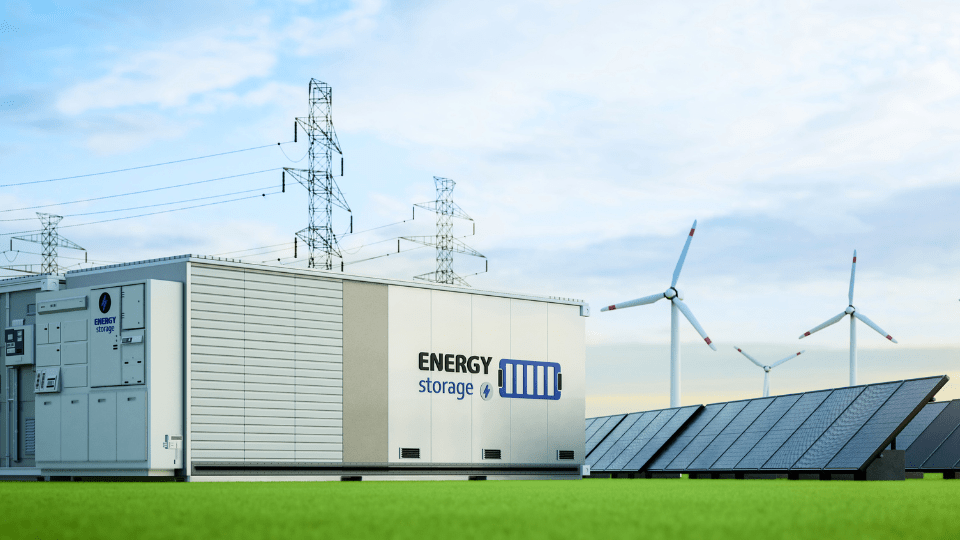
BESS is booming in Japan. An expanding mix of investors, including financial institutions, real estate developers, foreign funds, major power companies, and renewable energy developers, are entering the sector, often establishing joint ventures to leverage their respective strengths. This momentum was evident in the second LTDA auction, where BESS projects accounted for the vast majority of bids with 6.96 GW, while only 1.37 GW was awarded, illustrating the scale of investor interest.
Yet rapid expansion brings its own pressures. The first-come, first-served interconnection rule and long lead times for grid connection approval (one to four years depending on project size) remain major bottlenecks. Although OCCTO forecasts BESS demand of 8 to 10 GW by 2040, interconnection applications have already surpassed 18 GW, raising concerns about potential oversupply and a more competitive merchant market environment. The BESS sector remains highly dynamic, but its development will require careful monitoring and ongoing evaluation.
—
—
Offshore Wind
Mitsubishi’s exit triggers a reset of Japan’s offshore wind auction rules
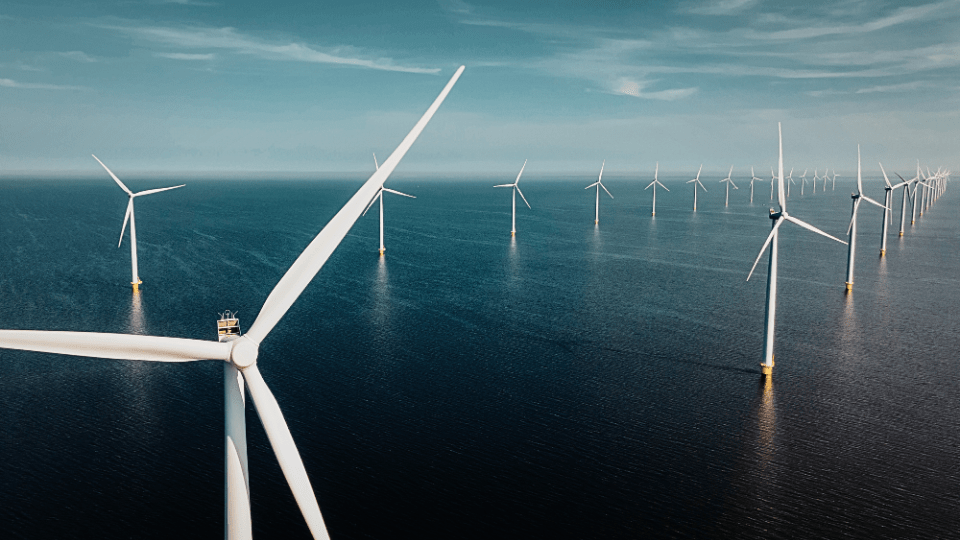
In August, Mitsubishi Corporation announced its withdrawal from 1.7 GW of projects awarded in the 2021 inaugural offshore wind auction, claiming rising global inflation and costs made the projects commercially unfeasible. In November, METI presented a new set of proposed criteria for the re-auction of these projects, including the introduction of a price floor to prevent bidders from offering unrealistically low prices, along with more detailed planning and domestic procurement. The revision of auction rules is expected to be concluded within the year, and the three offshore areas off Akita and Chiba prefectures, from which Mitsubishi withdrew, will be re-auctioned as early as 2026.
Following Mitsubishi’s project cancellations, the government now plans to allow the selected developers in the second and third OSW auctions to participate in the LTDA as a support measure, guaranteeing fixed revenues for 20 years. Looking ahead, the round 4 OSW auction is underway and results are expected soon. The revision of OSW auction rules is critically important for the government to achieve its targets of 10 GW installation in general sea areas by 2030 and 30-45 GW of project formation, including floating offshore wind by 2040 – as set out in the 7th Strategic Energy Plan.
—
—-
—
Nuclear
Nuclear revival gains momentum in Japan
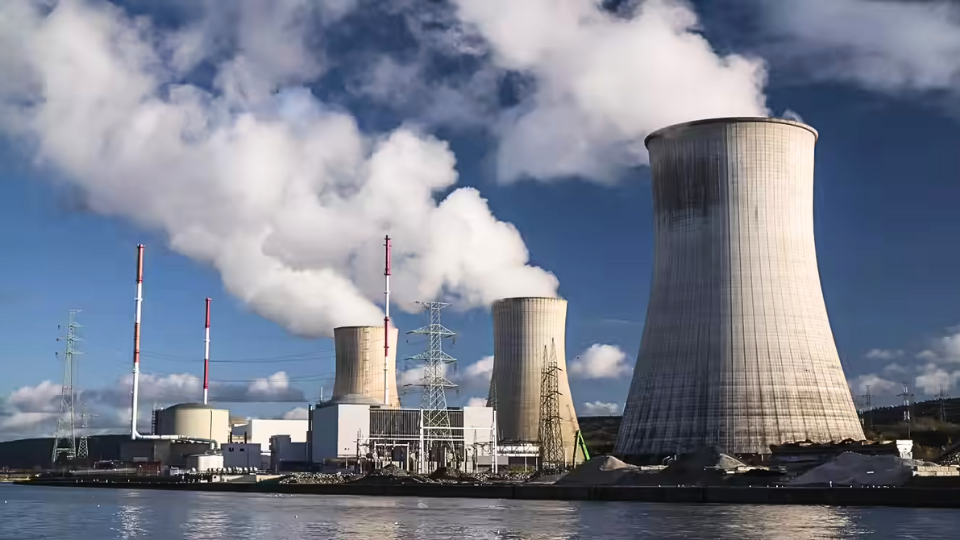
In June, the “GX Decarbonization Power Source Law”, which includes amendments to the Electricity Business Law, the Nuclear Reactor Regulation Law, and the Nuclear Energy Basic Law, came into force. The law now allows nuclear plants to operate beyond 60 years, reflecting the government’s clear intent to expand nuclear power over the mid to long term. Previously, nuclear plants were limited in principle to 40 years operation, with a single 20-year extension permitted.
We have seen a series of developments in nuclear power reactors. Recently, TEPCO’s Kashiwazaki–Kariwa nuclear plant unit 6 in Niigata and Hokkaido Electric’s Tomari nuclear plant unit 3 have taken concrete steps toward restarting. Kansai Electric has begun a geological survey at the company’s premises close to the Mihama nuclear plant in Fukui to prepare for the possible installation of a next-generation reactor (Nikkei). Along with the new regulations, these developments indicate that Japan’s nuclear industry is gradually starting to reemerge almost 15 years after the Fukushima disaster in 2011.
—
—

Futures Market
Japan power futures expand beyond Tokyo as regional trading deepens
When the European Energy Exchange (EEX) initially launched clearing services for Japanese power futures in 2020, most trading was concentrated in the Tokyo area; however, we have observed regional trading demand growth over time. In June, the EEX announced that it is considering introducing daily futures products for the Kansai area, which have been available only in the Tokyo area so far. The Kansai region has recently seen an expansion in its share of total traded volume, accounting for 14% in 2023, 23% in 2024, and 29% in the first quarter of 2025 (January to March). Behind this growth are factors such as diversification and an increase in market participants, as well as more active trading based on regional price differences.
In December, the EEX launched electricity futures trading for the Chubu area. In addition to the baseload and peakload products for each delivery period, it has also listed options with monthly baseload contracts as the underlying asset.
——
—

Emissions Trading
Japan prepares to launch ETS, prompting industrial players to readjust strategies
Japan is preparing for the introduction of the Emissions Trading System (ETS), which it plans to launch in autumn FY2027. The ETS is expected to cover businesses with direct CO2 emissions of 100,000 tons or more per year. Those affected are required to hold “emission allowances,” which function as tradable assets that can be exchanged on a commercial basis with other companies. Starting in FY2026, the baseline activity level (benchmark method) will be calculated based on the three most recent fiscal years (for FY2026, this means FY2023–2025) (see more details in this article).
Sector-specific working groups have started detailed discussions regarding benchmark methods. Among industrial sectors, the power generation sector is likely to be the most impacted by ETS. For thermal power plants, benchmarks will be set by fuel type (e.g., coal, natural gas) for the first three years from FY2026, taking into account the transition hurdles. From FY2029, the system will transition to a unified benchmark based on the average emission intensity of all thermal generation: 80% fuel-type and 20% unified in FY2029, shifting to 60% and 40% in FY2030. By Phase 3 in FY2033, all generators will be required to purchase allowances fully based on their emissions, regardless of fuel type (METI). The ETS subcommittee will continue discussing details until early 2026, including the floor and ceiling prices for GX-ETS emissions allowances.